Kraft-Tex: what is it? Composition, properties and a leatherworker's review
Kraft-Tex is a washable, sewable paper that progressively mimics the look of leather. Composition, properties, washed vs unwashed, uses in leatherwork: my test and honest review after years of use.
What is Kraft-Tex?
Kraft-Tex (by C&T Publishing *) is a super-strong paper — the word kraft means "strength" in German — that can be washed, tumble-dried, ironed, sewn, dyed, painted, and punched… and that gradually develops a texture and feel closer and closer to leather as it's washed and used.
Composition
It's made of 57 % cellulose, 33 % latex, and 10 % "other" ingredients (the exact formula is, of course, secret), including dyes and water.
It's designed to be eco-friendly, vegan, durable, and recyclable… quite a promise!
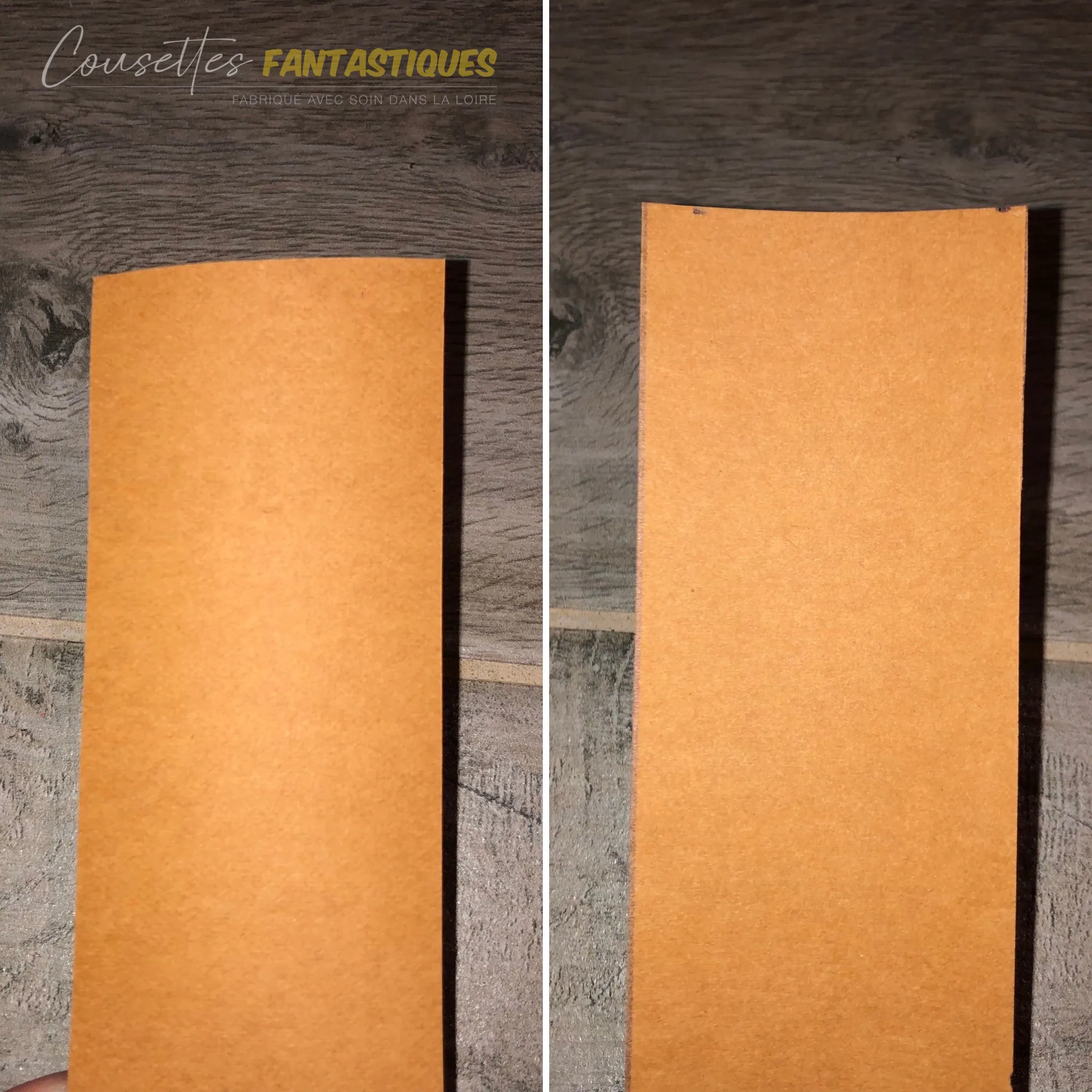
Of course, it won't ever feel exactly like real leather — but I still prefer it to Piñatex, and always to imitation leather, which I use reluctantly.
Washed or unwashed: two distinct uses
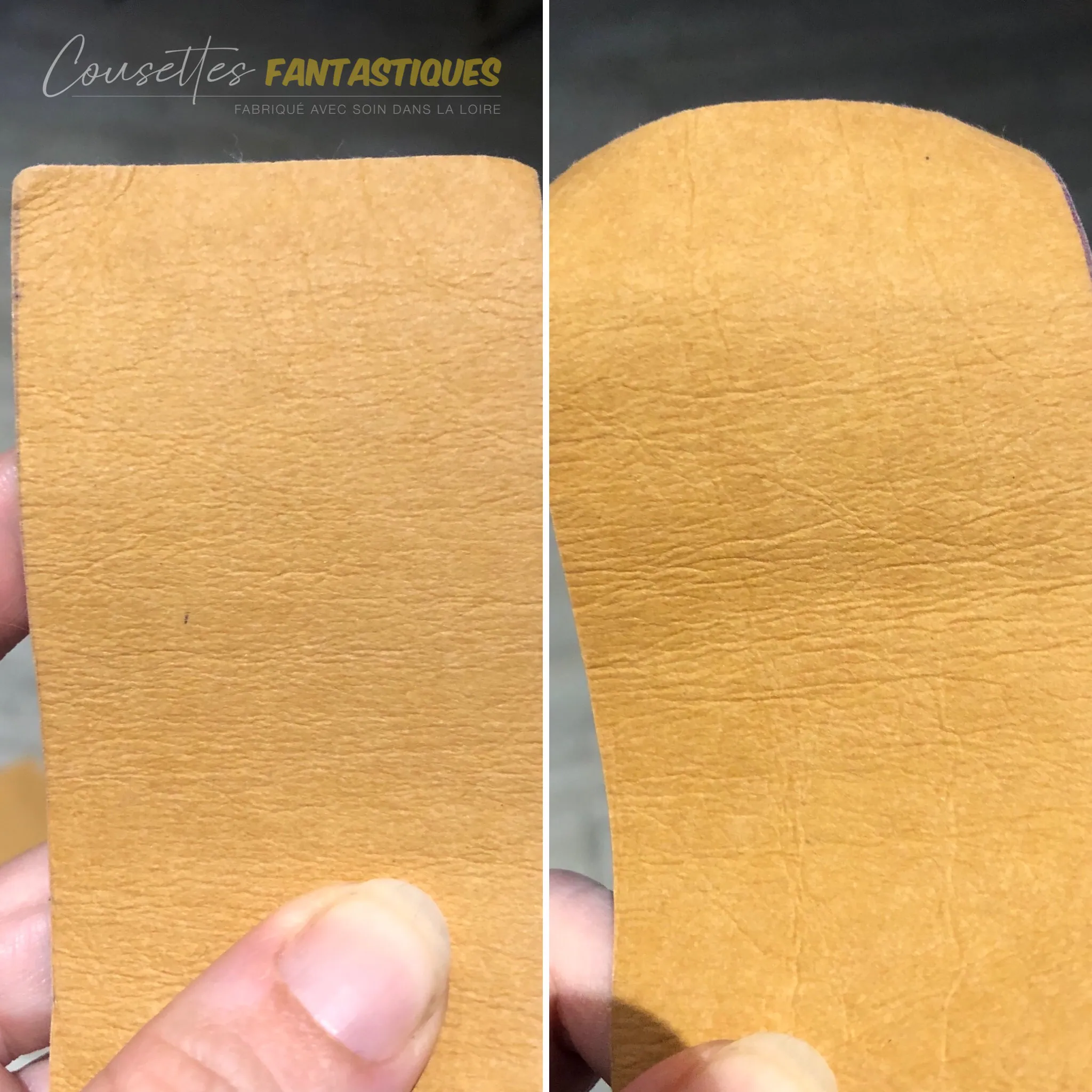
It's available dyed or undyed, prewashed or not, depending on what you plan to use it for.
→ Unwashed, it's as stiff as thin cardboard (think heavy Canson paper, but smoother and even firmer) — perfect for giving structure to accessories like wallets, or even for the body of a bag, provided you don't mind its smooth surface.
→ Washed, with its leather-like appearance, it's ideal for outer use. In fact, it was originally developed for making jeans labels…
Kraft-Tex in my leatherwork
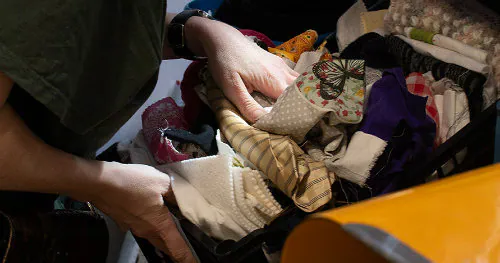
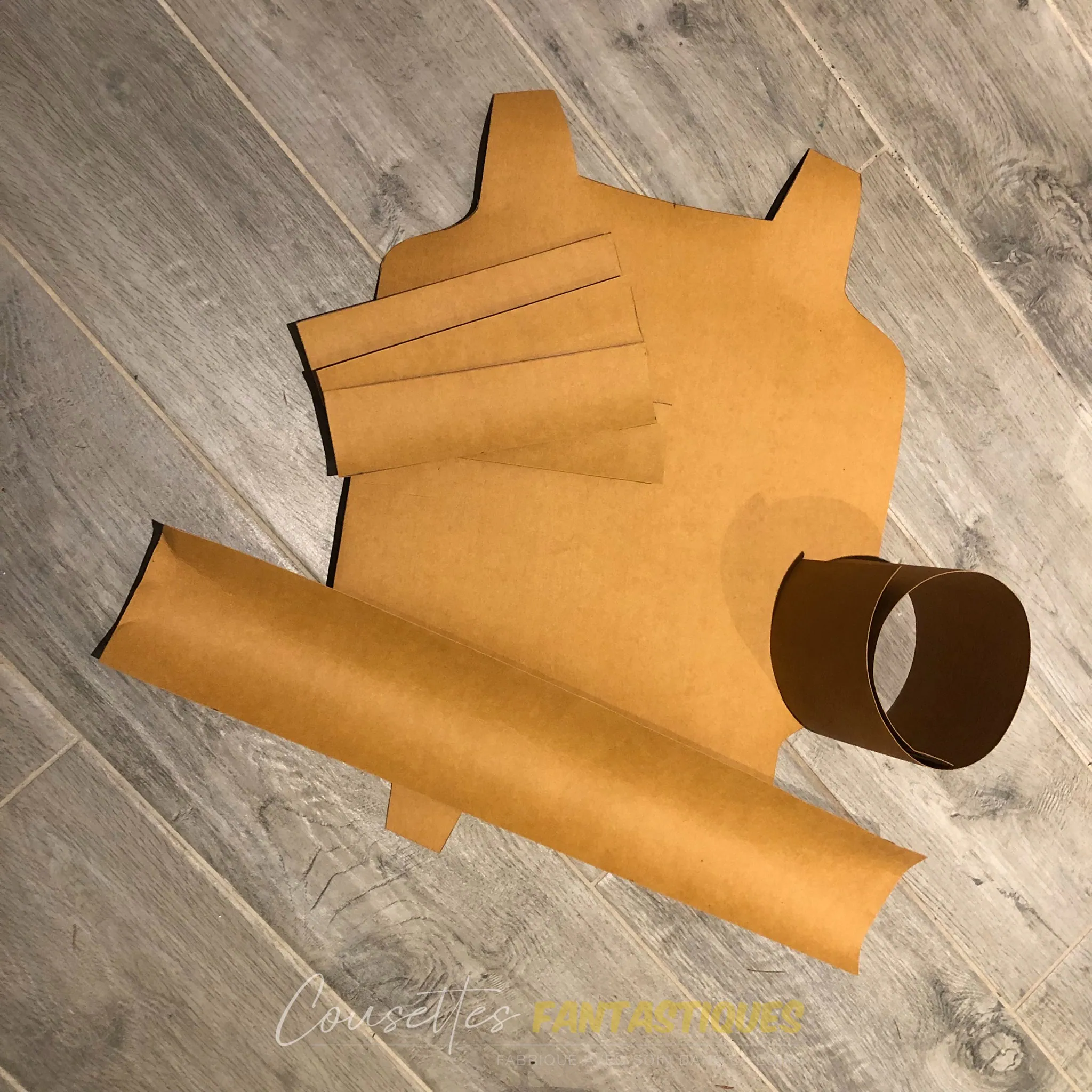
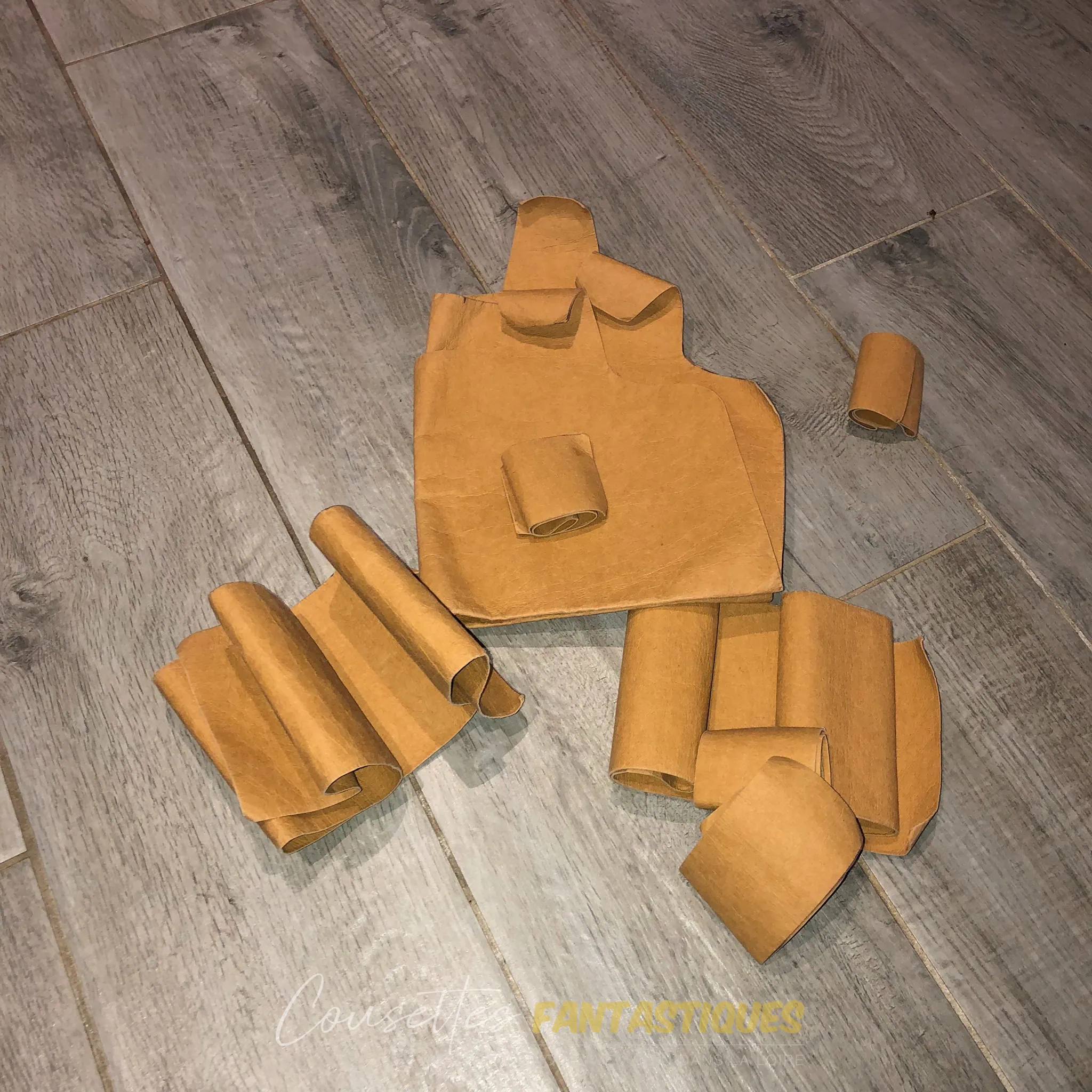
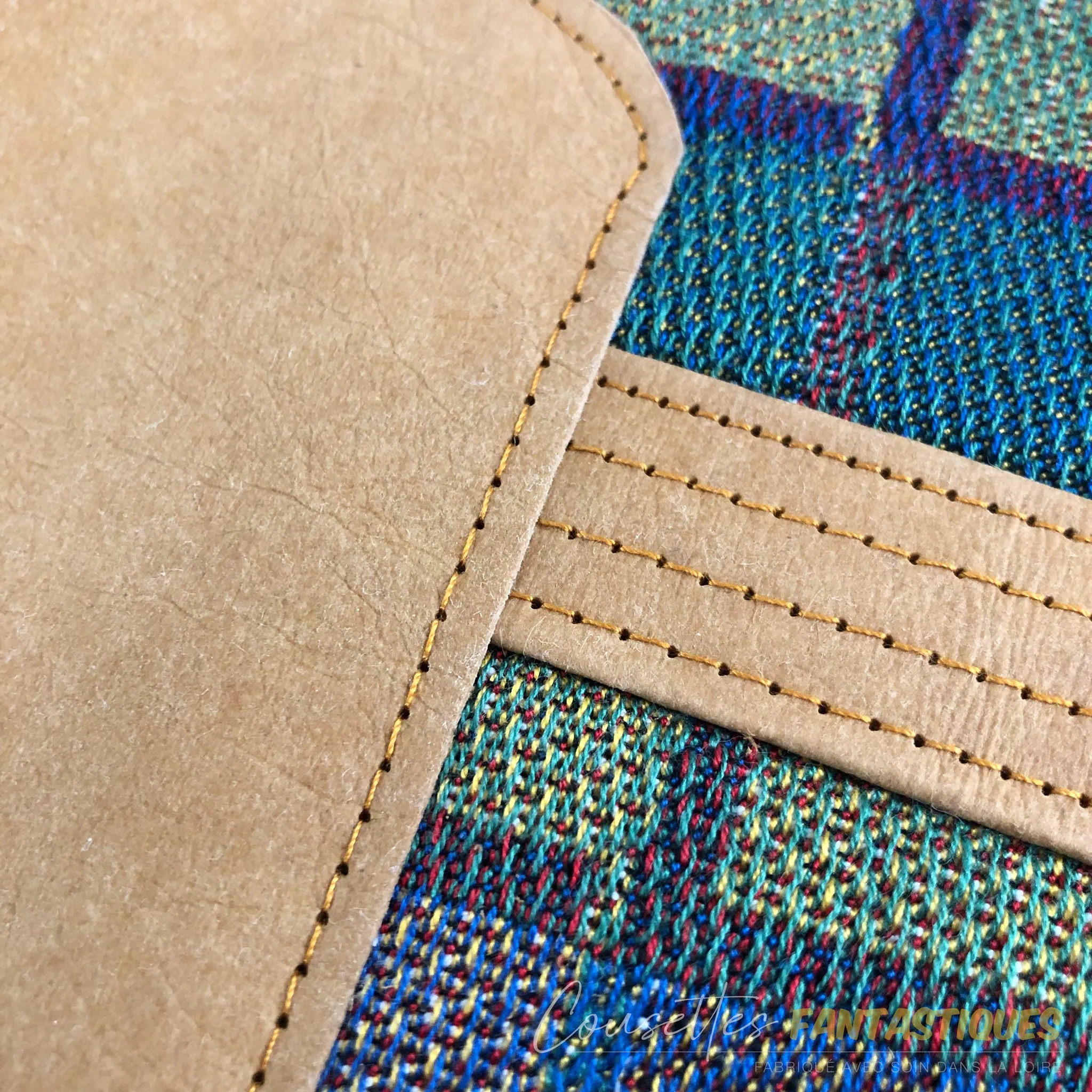
A few more pictures: after two washes and tumble-drying, ready to be sewn, and being incorporated into a bespoke project for a client.
My honest review after years of use
With hindsight, I now use it almost exclusively as interior reinforcement, unwashed. Its slightly dry feel and stiffness — which might seem like drawbacks for outer use — make it a perfect reinforcement: it adds structure without excessive thickness and holds up well under stress.
As for how it ages in outer use, I remain cautious: I haven't had enough long-term feedback to give you a straight answer. The potential is there — but it really requires the right conditions.
What I wish I'd known beforehand
- Avoid leather needles and tight stitch lengths. The accumulation of perforations creates a "perforated stamp" effect that significantly weakens the material. It may seem indestructible, but once compromised — a cut, too many holes — it tears easily.
- Go for raw edges rather than right-sides-together seams followed by turning. It doesn't fray (a real advantage), but it's too stiff to turn out neatly.
- An unwanted stitch won't disappear — the holes stay visible, unlike with leather or dense fabric.
- Not suitable for shoulder straps, too stiff for repeated flexing. It works well, however, for very structured handles.
Who is Kraft-Tex for?
It's a material with real potential, but demanding and tricky. It requires solid technical skills, a decent budget (it gets expensive fast and isn't always easy to source), and patience. I'd recommend it to experienced sewists and leatherworkers looking to experiment — not to those looking for a simple alternative to leather.
Have you ever heard of this "washable paper"?
Do you like it or not?
Some examples of it used on the outside in the online shop: Zip Around Wallet "Art Déco Sylvestre", Shoulder Bag "Chocolat, Pralines, Citron", Mini Travel Bag "Signes" and its matching pouch, Shoulder Bag "Ruche Chocolatée" and its matching Mini Accordeon Wallet.
[*: Other brands make similar versions with slightly different compositions — there's even apparently a French one made of 50% cellulose and 50% latex, but I haven't been able to test it yet, so I don't know if it has exactly the same properties.]