My approach to sustainability: how I create differently
Upcycling, repurposed materials, one-of-a-kind production: how I reduce the impact of my leatherwork practice while creating objects full of meaning.
Let's start with a quick definition:
“Sustainable development is development that meets the needs of the present without compromising the ability of future generations to meet their own needs.”
Canadian Environment Ministry
Upcycling (creative reuse, valorisation) is often seen as an approach that lives up to this definition.
Virtuous, responsible, lasting.
As opposed to "fashion" (let alone "premium" or "luxury"), which is generally considered — rightly so — as the territory of abundance, waste, and the ephemeral.
Consistency of approach
So, you can imagine the cognitive dissonance when I decided to launch into this profession…
I didn't want to — couldn't — just "make bags for the sake of making bags", or add objects to objects… there are already far too many of them.
Upcycling allows me to live my personal and family values day to day:
- buying local, bulk, organic, second-hand (books, electronics, clothing, toys…);
- practising attachment parenting: babywearing, extended breastfeeding, cloth nappies…;
- low-carbon mobility: cycling, holidays in France, no planes…
From the start, I chose to produce differently.
To leave a smaller footprint and bring meaning back to what is usually a more frenetic kind of consumption.
How I reduce my impact
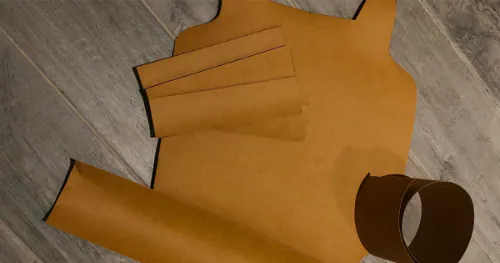
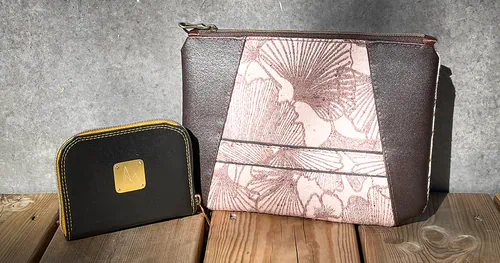
I repurpose as many materials as possible: scraps from high-end leather goods workshops, second-hand garments, surplus from fellow dressmakers and leatherworkers, second-hand packaging…
And of course, all the materials you entrust me with for your bespoke projects: garments, bags, furnishing elements…
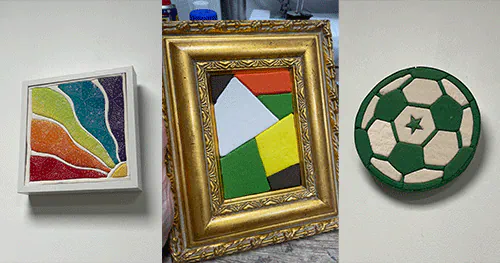
I also try to get the most out of my offcuts: using them as structural reinforcement, donating them to other craftspeople and sewing associations…
After all, the best waste is the kind that never happens.
For my communications, I work with responsible printers (recycled papers, vegetable-based inks), and my website is lightweight, optimised, and hosted in France.
Finally, I chose not to produce in series — I don't have a signature model I'll repeat endlessly.
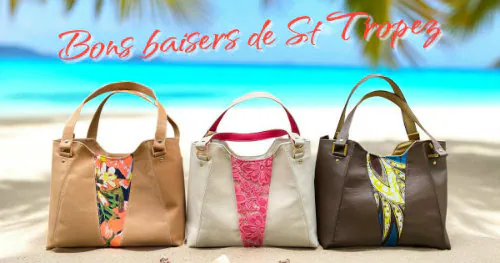
My output is measured and considered: one-of-a-kind pieces and micro-collections.
Each creation is the result of a specific, considered impulse.
Going further
Of course, there's always room to do better.
I'd like to find French suppliers for some of my technical materials (interfacing, stabilisers, hardware — why not).
Potentially more expensive, but it makes sense.
I'd also like to organise a "scraps month", during which I'd force myself to work only with offcuts and materials already in the studio.
And on a very practical level, I'd love to better insulate my studio to avoid unnecessary heat loss (and therefore use heating less).
I create differently, to slow down, to inhabit the world differently — with respect, patience, and memory.
Turning memories into wearable works of art.
I know many of you already share these values, sometimes far longer than I have.
What if you carried this approach with me?
By choosing a piece already born from my hands.
Or by entrusting me with your memories and materials to transform, bespoke.