Soulful values
This is political.
My practice reflects my personal values: a mix of environmentalism, feminism, and slow fashion.
Truly unique pieces
I hate mass producing, except when it serves a purpose.
So I don’t do it, or barely: never the same fabric/pattern combo twice, and five repeats of the same bag or wallet pattern, tops.
Mostly because, outside of bespoke work, I only sew when inspiration strikes, when a “flash” of an idea grabs me.
Also because my fabrics and leathers, almost all thrifted on a whim, are too rare to churn out endlessly (sometimes I barely have enough for a single piece).
And finally because I hate repeating myself, while I love exploring new patterns and new techniques.
In other words: I don’t necessarily create things thinking they’ll sell, but because I need to see them take shape.
Kinusaiga is a bit different: I create the designs myself, and the series stay small. As for the kits, I don’t see them as a series: I’m not the one who makes them.
And when you adopt one of my numbered pieces, you can be sure it’s an original.
Upcycled materials, and real quality
Textile arts consume resources, so to stay aligned with my values, I practice them mindfully.
I favor organic materials, short supply chains when I can, and fabrics/leathers “with a story”: forgotten, thrifted, or entrusted to me.
I’ve also tried lots of vegan alternatives, and opened up to lots of things. But none of them really won me over: they all have a flaw. In the end, I went back to fabric and leather.
Since 2025, I no longer use faux leather at all (which, by the way, never came from the “new” supply chain anyway).
By choosing upcycled materials, I reduce my impact and give each piece its own unique character, without giving up an inch on durability: sturdy fabrics, robust leathers, construction methods built to last...
And for metal hardware, a single supplier, from Belgium ↗ (new tab), run by a woman whose work I’m proud to support.
That’s how I favor longevity and durability.
No waste
I try to be as economical as possible (with materials, resources, time), especially since mine are often rare or one-of-a-kind.
To get there, I optimize my cutting and construction methods as much as I can, even when it takes longer.
It’s also why some pieces are labeled “Near Perfect ↗ (new tab)”: I don’t hide their small flaws, which are almost always barely visible and purely cosmetic. They’re not remade either (no point wasting more): they’re sold as is, at a discount. For you, that’s a beautiful piece at a softer price, and for all of us, one more step toward a more sustainable world.
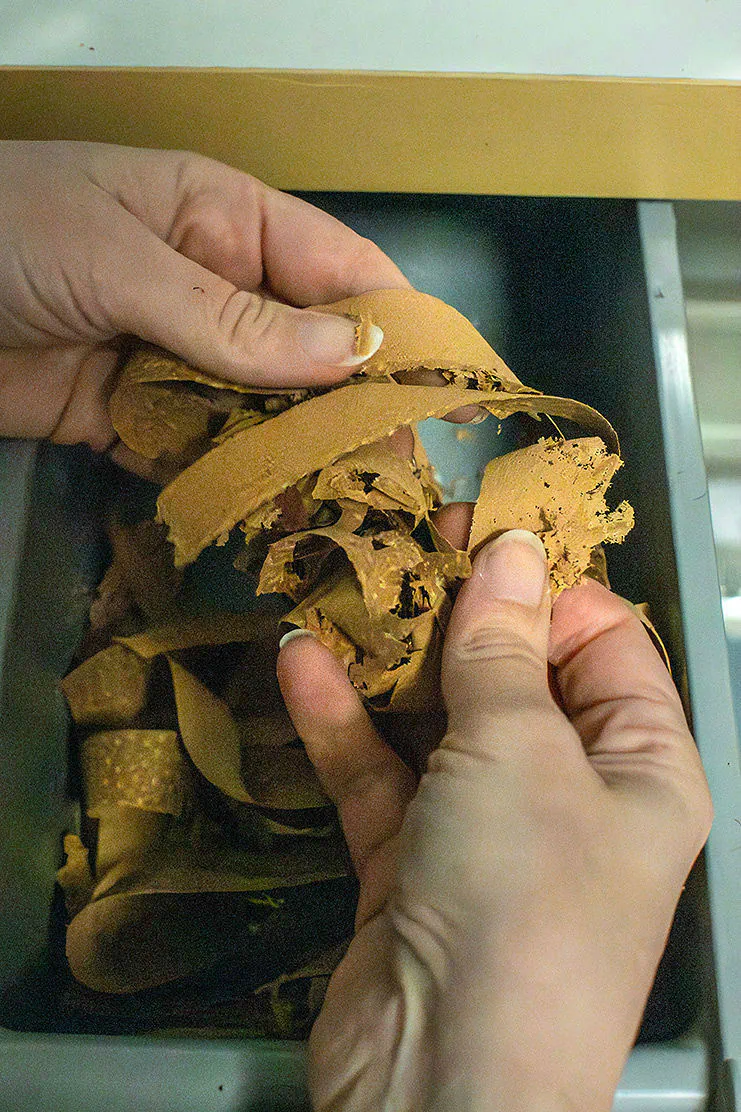
As for my scraps (there’s always a few), nothing goes to waste: they’re used for reinforcement, become the fabrics of my Kinusaiga pictures and kits, get turned into mosaics or small creations (keychains, bookmarks), or are given away to other makers, charities, and schools.
Reminder: the best waste is the waste you never create.
Down to the details
Even my comms try to respect the environment...
My stickers are made from compostable sugarcane paper, my flyers from chlorine-free recycled paper, my tissue paper made in France (Papeteries de Montségur ↗ (new tab), just down the road from my workshop).
I reuse every box that crosses my path, and my tape is plant-based and compostable.
Even this website is designed to be lightweight: a light architecture, a French host.
My commitment doesn’t stop at the workshop door.
At the end of the day, I’m not here to add more stuff to more stuff.
I want to create pieces that make you think and give you goosebumps, for a long, long time.
My worlds
-
 Your fabric still has stories to tell: I turn it into a custom-made bag, wallet or textile picture.
Raconteuse d’Histoires Textiles ↗(new tab)
-
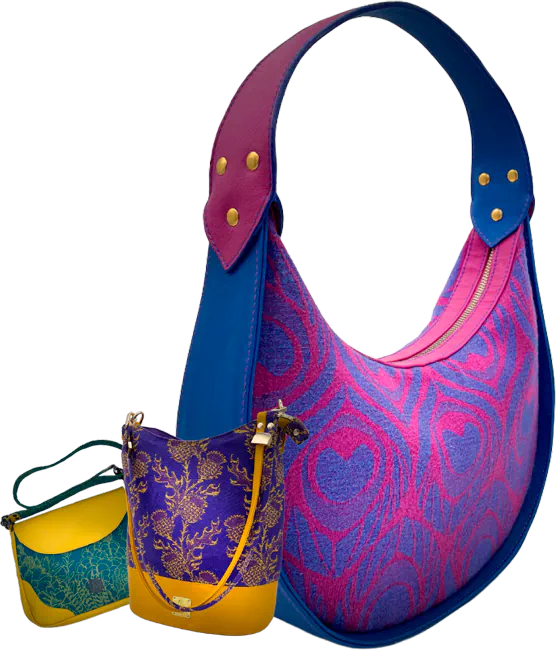 One-of-a-kind pieces, ready to adopt, born from fabrics and leathers that have already lived.
Maroquinerie Sentimentale ↗(new tab)
-
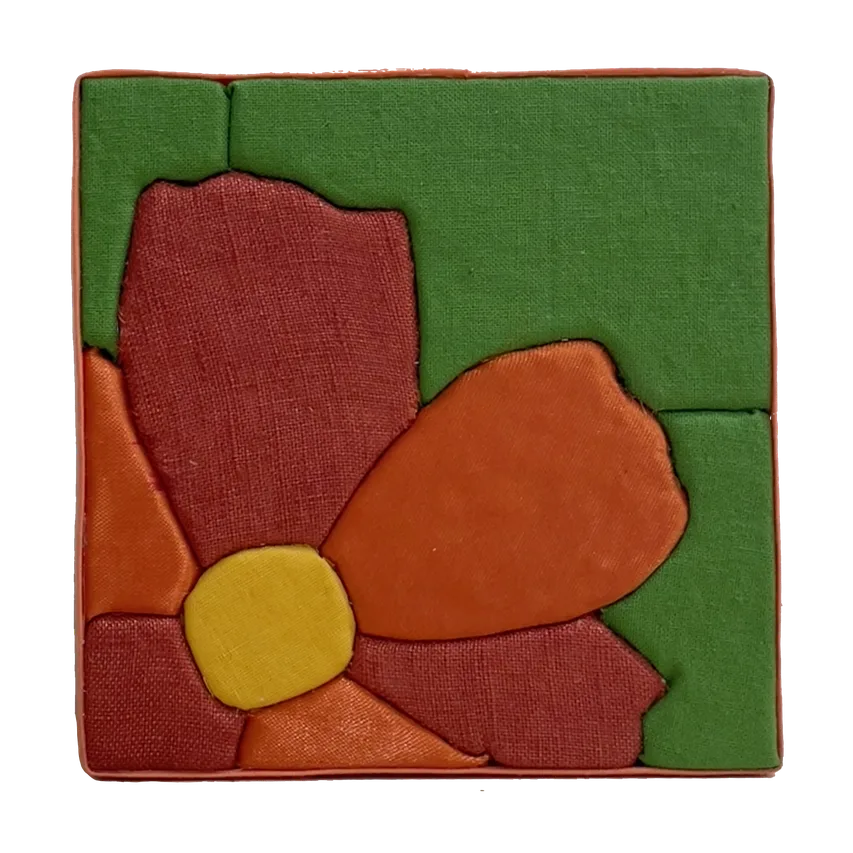 A textile picture to make yourself, with a kit or in a workshop, or ready to hang.
Kinusaiga Sentimental ↗(new tab)
-
Art, differently
Before leather and fabric, there was code. And it’s still here: I build websites for other people, with the same high standards and the same eye for detail as in the workshop. Because beautiful code is art too.
A website project? Discover PouipouiDesign ↗(new tab)